There are many reasons why writing and sustaining conflict in stories for corporate training is difficult. Probably the biggest reason is this: conflict is emotional.
The adverse reaction to emotion in corporate environments has trickled down to training. Stakeholders just want people to be aware of things. "Just tell them about our policies. They will do what they are told." But if that were true, compliance hotlines would have stopped ringing long ago. People who know what to do and know how to do it still choose not to. Why? Many times, they have not been emotionally engaged by their leadership. And training has been a strict appeal to their intellect. So, how can we reach more minds and hearts? Well, if you're designing training, one way to do that is through Story Design, where strong conflict plays a key role in keeping the plot alive and your learners interested in what happens next. Here's how it works.
With your list of observable actions that learners need to perform, and relatable characters that you've constructed (Chapter 5 in Rance's book,
Instructional Story Design), using your learner profile (Chapter 3) as a guide, follow these four basic principles for keeping the story on track with conflict that immediately connect with the training.
A story premise is a fill-in-the-blank formula that identifies the relatable character in the story and what they are struggling to do (the focus of the conflict). Choose one or many actions from the action list that the character will struggle to do. The more actions they are in conflict with, the more complex and interesting the story becomes and the more influence it will have on the training.
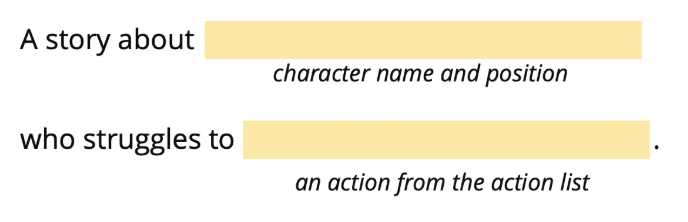
For instance, if the goal of training is to increase employee skills to communicate with peers when they disagree, one of those actions may be: "Share your view based on facts, rather than emotions." The story premise identifies the character's name, Beth, and the action that she struggles with. This will be the focus of the conflict for the story.
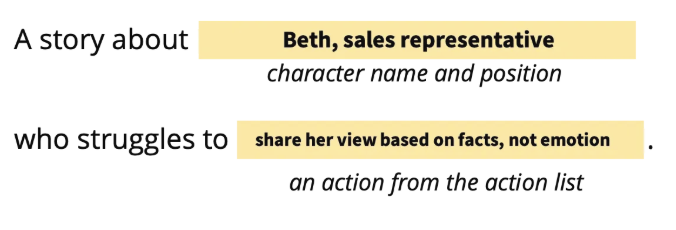
Can you image a story unfolding between Beth and one of her peers? It's not that difficult once the story premise is constructed.
Let's say that there are two more actions you want employees to take that will increase their communication skills during times of disagreement.
- Share your view based on facts, not emotions
- Give your peer an opportunity to share their view
- State that you are interested in finding a solution that you can both agree upon.
Now imagine a conversation between Beth and one of her peers. You can easily expand the story to put Beth in conflict with all of these actions.
This is one of the most common pitfalls. Beth communicates her view based on facts, She listens to her peer's point of view. They come to a solution that they both agree upon. Everything works out perfectly.
Boring! And unrealistic.
I get it. You want to bring the action to a nice, neat conclusion. But a resolved story in training dissolves the tension created by conflict and diminishes its effectiveness significantly. You want to end at the peak of conflict and let it sit with your learners. Ask some questions after the unresolved story that start them thinking about how they would respond in this situation. Let them discover the way forward for themselves. Guide them with feedback that links performance back to the story. Now, you're letting the story do the work of keeping learners emotionally connected to the training.
Chapter 7 of the book goes into great detail on building your story for training. Once you've built the story, read it aloud to someone and ask them:
- Do you know the characters? This will test how relatable your characters are for your learning audience.
- Do you feel for them? This will test how emotionally connected they are to the characters.
- Can you see the story unfolding in your mind? This will test whether or not you are showing the action, rather than telling about the action (Lots of guidance on this in Chapter 6).
- Do you want resolution? This will test how strong your conflict is. If their answer to this question is "No" keep reading!
People do not behave in a vacuum. There are many reasons why they choose to behave inappropriately.
Beth may have a project that she needs to complete and doesn't feel like she has time to listen to another point of view at this time. She may be struggling with a recent organizational change. The peer she is speaking with may have embarrassed her at a recent team meeting and she's scared to be vulnerable.
These work environment and cultural influences that are very real for your learning audience should make their way into the story.
The story may get messy...like life. The conflict may get intense...like life. Make it real. Your learners will thank you for remembering that they are more than a mind. They are also emotional.
Take your training to the story level with a method that is transforming instruction around the globe.
Is your company emotional-averse? Check out Chapter 12 for strategies on winning over stakeholders to storytelling!